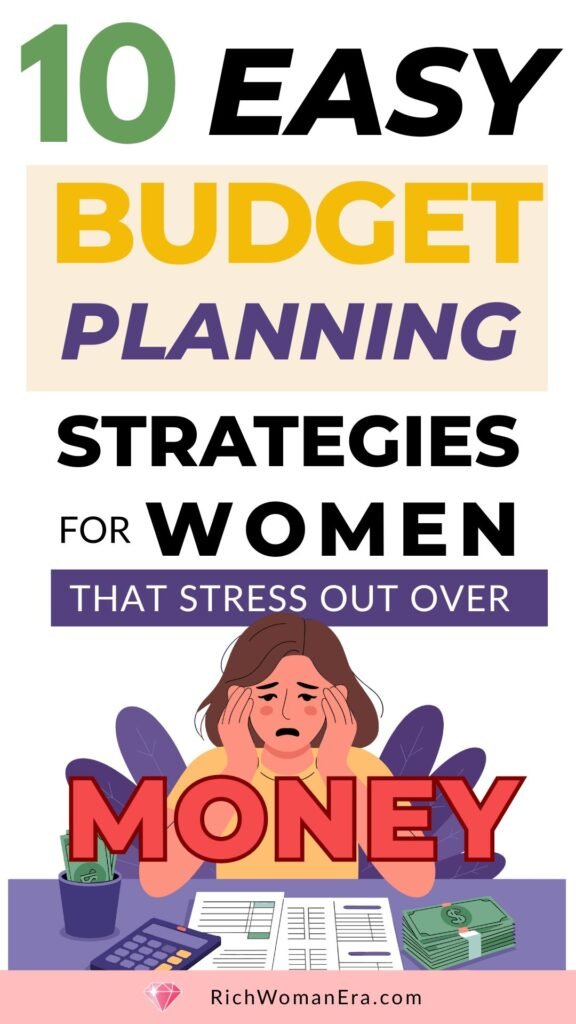

Budget planning keeps your money from disappearing every month. If you’re tired of feeling broke by Friday, these 10 proven methods make it simple to take control—no complicated spreadsheets required. Each one includes a real $2,000 income example, quick-start steps, and benefits tailored for women building financial freedom.
Pick your favorite method below, test it this week, and watch your bank account grow. Manual-entry apps make any system easier (privacy-first, no bank sync needed). Ready to stop the broke cycle?
1. Budget App (Manual Entry Method)
Manual entry budgeting apps provide privacy and spending awareness without bank synchronization. Users log cash, card, and digital transactions by hand to reveal spending patterns instantly.
$2,000 example: Rent $1,200, groceries $400, coffee $80, retail $120. Results in pie chart showing “Fun” category at 20% of income already spent.
Benefits: Eliminates bank login security concerns, encourages mindful spending decisions before purchase, ideal for cash-based transactions. Entries take 60 seconds each while building financial awareness rapidly.
Best for: Users prioritizing data privacy over automation.
2. 50/30/20 Rule Method
This method allocates income as 50% to needs (housing, food), 30% to wants (shopping, dining), and 20% to goals (savings, debt reduction).
$2,000 example: Needs $1,000 (rent $800, food $200), Wants $600 (retail $300, dining $300), Goals $400 (savings $200, debt $200).
Benefits: Creates sustainable balance preventing spending fatigue, uses simple percentages requiring no complex calculations, applies equally to salaried and irregular income. Provides designated “wants” budget eliminating guilt.
Best for: Beginners seeking straightforward allocation structure.
Related post: 11 Simple Financial Tips to Stop Being Broke Forever
3. Envelope System Method (Digital/Virtual)
Categories receive predetermined digital “envelopes” of funds. Zero balance halts spending in that category.
$2,000 example: Rent envelope $1,200, Groceries $400, Fun $200, Savings $200. Fun envelope reaches zero Thursday—no further discretionary spending allowed.
Benefits: Digital tracking shows real-time balances, automatic spending limits prevent debt accumulation, accessible across devices. Manual entry apps support virtual envelope creation and monitoring.
Best for: Digital-first users requiring spending boundaries.
4. Zero-Based Budget Method
Every dollar receives a specific assignment until total income minus assignments equals zero. No funds remain unallocated.
$2,000 example: Rent $1,200 (assignment 1), Groceries $400 (assignment 2), Savings $200 (assignment 3), Fun $200 (assignment 4). Total assignments = $2,000.
Benefits: Maximizes every dollar through intentional allocation, eliminates “floating” money prone to waste, accelerates debt reduction. Manual entry reinforces categorization discipline throughout the month.
Best for: Detail-oriented users focused on debt elimination.
5. Pay Yourself First Method
Savings and debt payments receive priority allocation before other spending categories.
$2,000 example: $400 allocated to savings/debt (20%) first, remaining $1,600 budgeted across other categories.
Benefits: Builds wealth automatically before spending temptation arises, establishes savings as non-negotiable priority, creates emergency fund reliably. Requires only single upfront decision each pay period.
Best for: Users building long-term financial security.
Related Post: How to Save Money Now: 10 Smart Moves for Women
6. 70/20/10 Rule Method
Allocates 70% to essentials, 20% to financial goals, 10% to discretionary spending. Designed specifically for variable income.
$2,000 example: Essentials $1,400 (rent $1,200, food $200), Goals $400 (debt $200, savings $200), Fun $200.
Benefits: Accommodates higher essential expenses realistically, maintains generous discretionary allowance preventing rebellion, uses simple round percentages. Manual apps calculate splits automatically from entered income.
Best for: Variable or irregular income earners.
7. Line-Item Budget Method (Detailed Forecasting)
Creates specific line-item budgets for every anticipated expense category with precise dollar amounts.
$2,000 example: Coffee $50, Gas $120, Retail $150, Dining $100, Streaming $25. Total “wants” line items = $445 planned vs. actual spent.
Benefits: Predicts spending patterns accurately, reveals hidden recurring costs, enables proactive adjustments before overspending occurs. Manual logging compares planned vs. actual at month end for refinement.
Best for: Users wanting granular spending visibility and forecasting.
8. No-Budget Method
Fixed percentage saved, essential bills paid, remainder spent freely with minimal tracking (weekly review recommended).
$2,000 example: 20% savings ($400), bills $1,200, remaining $400 free spending without categorization.
Benefits: Sustainable long-term approach avoiding tracking burnout, requires minimal daily maintenance, builds trust in personal spending discipline. Weekly manual review maintains accountability without obsession.
Best for: Users preferring simplicity over detailed tracking.
9. Challenge Method (7-Day Budget Test)
Short-term trial of any budgeting system for one week to test effectiveness.
$2,000 example: Envelope Method selected for trial → All transactions logged manually for 7 days → Most effective system chosen for ongoing use.
Benefits: Low commitment experimentation reveals personal preferences, builds budgeting confidence through short-term success, allows system comparison. Manual logging provides accurate test data.
Best for: Users hesitant about permanent system adoption.
Related Post: Budgeting for Beginners: 7 Simple Steps to Stop Living Paycheck to Paycheck.
10. Review Method (Weekly Audit System)
Structured weekly examination of spending patterns with immediate adjustments.
$2,000 example: Sunday review reveals “Fun” category overspent $30 → Reduce allocation 20% next week.
Benefits: Identifies slow spending leaks before escalation, adapts system to changing circumstances, develops financial intuition over time. Manual transaction records enable precise pattern recognition.
Best for: Users committed to continuous improvement
Conclusion For Budget Planning
You’ve got 10 budget planning methods to choose from—now pick one and start this week. Test the Envelope System if you need spending boundaries, try 50/30/20 for balance, or use the manual-entry app method for privacy-focused tracking. Small consistent steps beat perfect planning every time.
Next steps:
- Choose 1 method from above
- Log expenses manually for 7 days
- Review results Sunday night
Women who budget monthly save $2,800 more per year on average. Your first $100 saved this month starts the momentum. Which method will you try first?
Love Financial Advice? Save this pin to your Budget Planning Board so you can come back at anytime!